According to SPER Market Research, the Global Shrimp Feed Market is estimated to reach USD 7.62 billion by 2034 with a CAGR 5.17%.
Introduction and Overview
The report includes an in-depth analysis of the Global Shrimp Feed Market, including market size and trends, product mix, Applications, and supplier analysis.
The global Shrimp Feed Market was valued at USD 4.60 billion in 2024 and is expected to grow at a CAGR of over 5.17% from 2025 to 2034. The shrimp feed industry has evolved rapidly due to rising global demand for shrimp products and the expansion of shrimp farming. Growing shrimp consumption, driven by its nutritional benefits, is a key market driver. As aquaculture becomes more efficient and eco-friendly, the focus has shifted toward producing high-quality, nutritionally balanced feeds that support better growth and health. Advances in feed formulation technology now include ingredients that boost shrimp immunity and performance. Over the past two decades, major gains in shrimp aquaculture can be linked to improved farming practices and enhanced feed quality.
By Ingredients:
Fish meal–based feeds continue to grow steadily, supported by the rise of self-sustaining fish farming, which creates employment and helps reduce pressure on wild fisheries. These systems increasingly emphasize environmentally friendly feed options, with soy protein concentrates gaining strong momentum. Soy-based feeds are preferred for their rich protein content and overall nutritional value. Affordable alternatives made from wheat and corn are also becoming widely used, further shifting the market toward cost-effective, plant-based feed solutions.
By Products:
Grower feeds support shrimp during the rapid growth stage, supplying nutrients essential for the intermediate phase, while finisher feeds focus on muscle development and overall maturity in later stages. Market share across these feed types is shaped by targeted growth rates, feed efficiency, and health outcomes within the farming cycle. Advancements in precision aquaculture and technology are driving demand for more specialized, phase-specific formulations. Finisher feeds, rich in marine and plant proteins with vital micronutrients, undergo rigorous research and quality checks to ensure consistency and sustainability. Companies like Nutri Feeds are also developing cost-efficient systems that promote natural shrimp growth and eliminate prohibited substances.
Regional Insights:
The U.S. shrimp feed market is increasingly shaped by the growth of responsibly farmed shrimp, prompting a transition toward more sustainable, high-quality feed options. Trends indicate a rising preference for plant- and algae-based ingredients to reduce reliance on fishmeal and address sustainability concerns. Advances in feed formulation are improving shrimp health, growth, and feed efficiency, supported by the broader movement toward green consumerism. Growing awareness of aquaculture’s environmental impact is pushing manufacturers to develop eco-friendly feeds. At the same time, competition for key ingredients such as soy, corn, and algae is tightening supply and affecting costs
Market Competitive Landscape:
The Shrimp Feed Market is highly consolidated. Some of the market key players are Adisseo Group, Alltech, Avanti Feeds Ltd, Biomar Group, and Biomin Holding GmbH.
Recent Developments:
• In June 2024, shares of Avanti Feeds and Kings Infra Ventures rose as expectations grew for India to gain a larger share of the global shrimp market. A Crisil report predicts solid revenue growth for Indian exporters in FY25, supported by challenges facing key competitors such as Venezuela’s Grupo Lamar and Ecuador’s oversupply issues in the U.S. market.
• In June 2024, Apex Frozen Foods and Avanti Feeds recorded strong stock gains, driven by improved market conditions. Falling prices of major feed ingredients like soymeal and fishmeal boosted profitability, helping India strengthen its role in the global shrimp industry. India’s growing competitiveness and its ability to challenge Ecuador’s leadership have further reinforced its position as a dependable shrimp supplier.
Scope of the report:
Report Metric Details
Market size available for the years 2021-2034
Base year considered 2024
Forecast Period 2025-2034
Segments Covered By Ingredients, By Products, By Additives, By Shrimp Species
Regions Covered North America, Latin America, Asia-Pacific, Europe, and Middle East & Africa
Companies Covered Adisseo Group, Alltech, Avanti Feeds Ltd, Biomar Group, and Biomin Holding GmbH.
Key Topics Covered in the Report
• Global Shrimp Feed Market Size (FY’2021-FY’2034)
• Overview of Global Shrimp Feed Market
• Segmentation of Global Shrimp Feed Market By Ingredients (Fish meal-based feeds, Plant-based feeds, Soybean meal-based feeds, Wheat-based feeds, Corn-based feeds, Others)
• Segmentation of Global Shrimp Feed Market By Products (Starter feeds, Grower feeds, Finisher feeds)
• Segmentation of Global Shrimp Feed Market By Additives (Vitamins, Minerals, Probiotics, Prebiotics, Antibiotics, Others)
• Statistical Snap of Global Shrimp Feed Market
• Expansion Analysis of Global Shrimp Feed Market
• Problems and Obstacles in Global Shrimp Feed Market
• Competitive Landscape in the Global Shrimp Feed Market
• Details on Current Investment in Global Shrimp Feed Market
• Competitive Analysis of Global Shrimp Feed Market
• Prominent Players in the Global Shrimp Feed Market
• SWOT Analysis of Global Shrimp Feed Market
• Global Shrimp Feed Market Future Outlook and Projections (FY’2025-FY’2034)
• Recommendations from Analyst
Global Shrimp Feed Market Size- By Ingredients, By Products, By Additives, By Shrimp Species- Regional Outlook, Competitive Strategies and Segment Forecast to 2034
1. Introduction
1.1. Scope of the report
1.2. Market segment analysis
2. Research Methodology
2.1. Research data source
2.1.1. Secondary Data
2.1.2. Primary Data
2.1.3. SPER’s internal database
2.1.4. Premium insight from KOL’s
2.2. Market size estimation
2.2.1. Top-down and Bottom-up approach
2.3. Data triangulation
3. Executive Summary
4. Market Dynamics
4.1. Driver, Restraint, Opportunity and Challenges analysis
4.1.1. Drivers
4.1.2. Restraints
4.1.3. Opportunities
4.1.4. Challenges
5. Market variable and outlook
5.1. SWOT Analysis
5.1.1. Strengths
5.1.2. Weaknesses
5.1.3. Opportunities
5.1.4. Threats
5.2. PESTEL Analysis
5.2.1. Political Landscape
5.2.2. Economic Landscape
5.2.3. Social Landscape
5.2.4. Technological Landscape
5.2.5. Environmental Landscape
5.2.6. Legal Landscape
5.3. PORTER’s Five Forces
5.3.1. Bargaining power of suppliers
5.3.2. Bargaining power of buyers
5.3.3. Threat of Substitute
5.3.4. Threat of new entrant
5.3.5. Competitive rivalry
5.4. Heat Map Analysis
6. Competitive Landscape
6.1. Global Shrimp Feed Market Manufacturing Base Distribution, Sales Area, Product Type
6.2. Mergers & Acquisitions, Partnerships, Product Launch, and Collaboration in Global Shrimp Feed Market
7. Global Shrimp Feed Market, By Ingredients, (USD Million) 2021-2034
7.1. Fish meal-based feeds
7.2. Plant-based feeds
7.3. Soybean meal-based feeds
7.4. Wheat-based feeds
7.5. Corn-based feeds
7.6. Others
8. Global Shrimp Feed Market, By Products, (USD Million) 2021-2034
8.1. Starter feeds
8.2. Grower feeds
8.3. Finisher feeds
9. Global Shrimp Feed Market, By Additives, (USD Million) 2021-2034
9.1. Vitamins
9.2. Minerals
9.3. Probiotics
9.4. Prebiotics
9.5. Antibiotics
9.6. Others
10. Global Shrimp Feed Market, By Shrimp Species, (USD Million) 2021-2034
10.1. Pacific white leg shrimp
10.2. Black tiger shrimp
10.3. Others
11. Global Shrimp Feed Market, (USD Million) 2021-2034
11.1. Global Shrimp Feed Market Size and Market Share
12. Global Shrimp Feed Market, By Region, 2021-2034 (USD Million)
12.1. Asia-Pacific
12.1.1. Australia
12.1.2. China
12.1.3. India
12.1.4. Japan
12.1.5. South Korea
12.1.6. Rest of Asia-Pacific
12.2. Europe
12.2.1. France
12.2.2. Germany
12.2.3. Italy
12.2.4. Spain
12.2.5. United Kingdom
12.2.6. Rest of Europe
12.3. Middle East and Africa
12.3.1. Kingdom of Saudi Arabia
12.3.2. United Arab Emirates
12.3.3. Qatar
12.3.4. South Africa
12.3.5. Egypt
12.3.6. Morocco
12.3.7. Nigeria
12.3.8. Rest of Middle-East and Africa
12.4. North America
12.4.1. Canada
12.4.2. Mexico
12.4.3. United States
12.5. Latin America
12.5.1. Argentina
12.5.2. Brazil
12.5.3. Rest of Latin America
13. Company Profile
13.1. Adisseo Group
13.1.1. Company details
13.1.2. Financial outlook
13.1.3. Product summary
13.1.4. Recent developments
13.2. Alltech
13.2.1. Company details
13.2.2. Financial outlook
13.2.3. Product summary
13.2.4. Recent developments
13.3. Avanti Feeds Ltd
13.3.1. Company details
13.3.2. Financial outlook
13.3.3. Product summary
13.3.4. Recent developments
13.4. Biomar Group
13.4.1. Company details
13.4.2. Financial outlook
13.4.3. Product summary
13.4.4. Recent developments
13.5. Biomin Holding GmbH
13.5.1. Company details
13.5.2. Financial outlook
13.5.3. Product summary
13.5.4. Recent developments
13.6. Others
14. Conclusion
15. List of Abbreviations
16. Reference Links
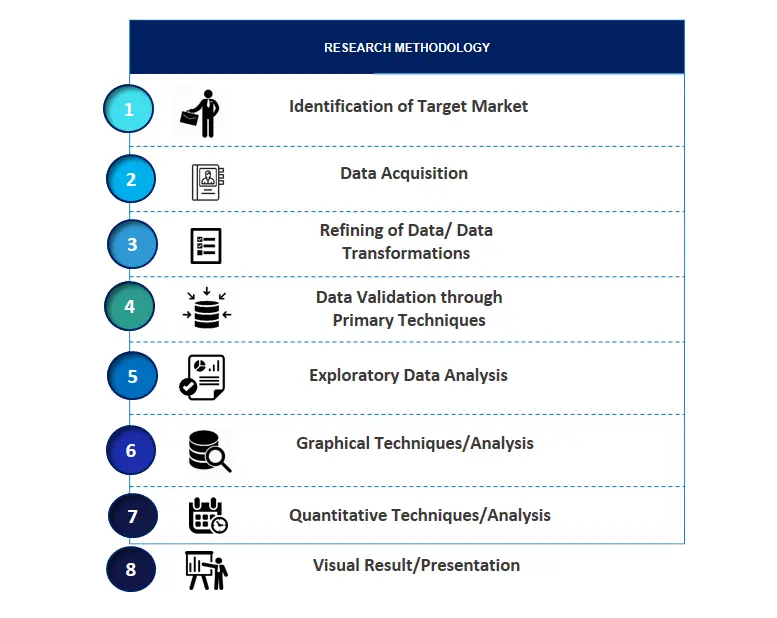
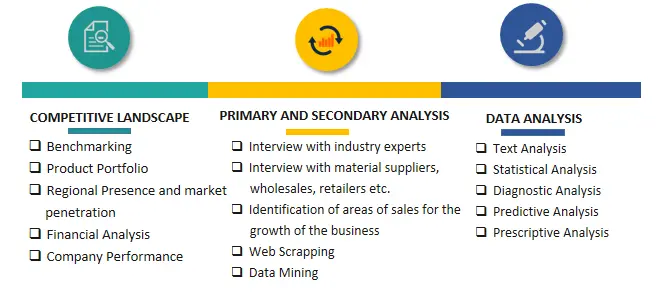
SPER Market Research’s methodology uses great emphasis on primary research to ensure that the market intelligence insights are up to date, reliable and accurate. Primary interviews are done with players involved in each phase of a supply chain to analyze the market forecasting. The secondary research method is used to help you fully understand how the future markets and the spending patterns look likes.
The report is based on in-depth qualitative and quantitative analysis of the Product Market. The quantitative analysis involves the application of various projection and sampling techniques. The qualitative analysis involves primary interviews, surveys, and vendor briefings. The data gathered as a result of these processes are validated through experts opinion. Our research methodology entails an ideal mixture of primary and secondary initiatives.